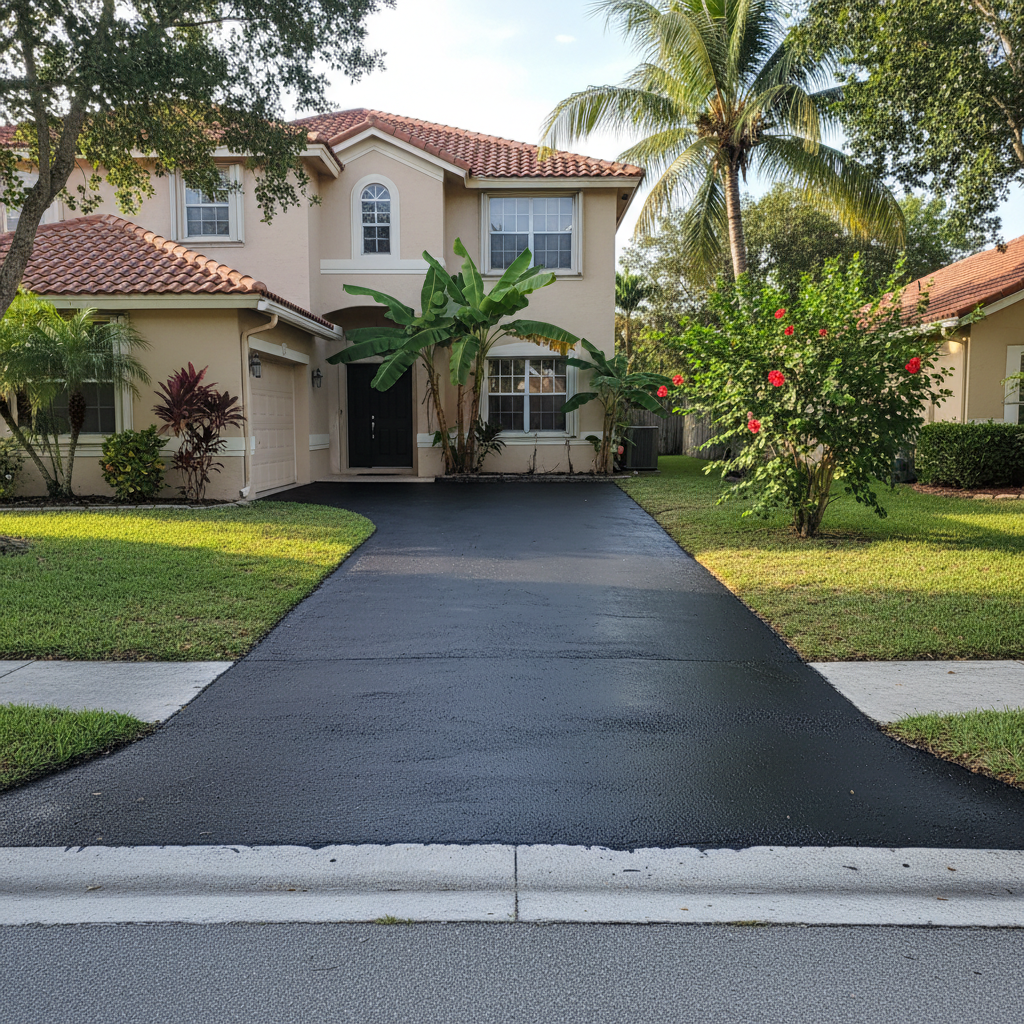
Alright, let's talk about sealcoating your asphalt driveway here in Miami Gardens. I see a lot of folks get this wrong, and it ends up costing them more in the long run. It's not just about slapping some black stuff down; it's about timing it right, especially with our South Florida weather.
Why Miami Gardens Weather Matters for Sealcoating
You know how it is around here. One minute it's blazing sun, the next you've got a pop-up thunderstorm that'll drench everything. That's not just annoying for your afternoon plans; it's a big deal for sealcoating. Sealcoat needs specific conditions to cure properly. If it doesn't cure right, it won't protect your driveway like it should, and you've basically wasted your money. What a bummer, right?
Our high humidity and frequent rain showers, especially during the summer, are the main culprits. You can't sealcoat a wet driveway, and you can't sealcoat if it's going to rain within 24-48 hours after application. The humidity also slows down the drying process. So, trying to sealcoat in July or August around here? You're playing a risky game, and usually, the house loses.
The Best Time to Sealcoat Your Driveway
From what I've seen over the years, the sweet spot for sealcoating in Miami Gardens is usually between late October and May. That's when we typically get our drier, cooler weather. You want a stretch of at least 2-3 days with no rain in the forecast, and temperatures consistently above 50°F (which, let's be honest, isn't usually an issue here) but ideally not scorching hot, either. Extreme heat can make the sealcoat dry too fast on the surface, trapping moisture underneath and leading to premature cracking or peeling.
Think about it: those beautiful, clear winter days we get? Perfect for sealcoating. The air is drier, the sun isn't as intense, and you're less likely to get those sudden downpours. You'll get a much better, longer-lasting finish.
What Weather Conditions to Watch Out For
- Rain: This is the number one enemy. If rain hits uncured sealcoat, it'll wash it away, leaving streaks, thin spots, or just a mess. You need a solid 24-48 hours of dry weather after application, depending on the product and conditions.
- High Humidity: While not as immediately damaging as rain, high humidity significantly extends drying times. This means your driveway might be out of commission longer, and there's a higher chance of a surprise shower ruining things.
- Extreme Heat: Above 90°F, especially with direct sun, sealcoat can flash dry. This means the top layer dries too quickly, but the layers underneath are still wet. It can lead to cracking, poor adhesion, and a shorter lifespan for the sealcoat.
- Wind: Strong winds can blow dust and debris onto your freshly applied sealcoat, embedding it in the surface. It can also speed up drying too much, similar to extreme heat.
Protecting Your Investment Year-Round
Once you've got that fresh sealcoat down, you've done a great job protecting your asphalt. But the work isn't over. Here's how to keep it looking good and performing its best:
First off, keep it clean. Sweep off leaves, dirt, and debris regularly. Don't let puddles sit on your driveway for days, especially in low spots. That constant moisture can break down the sealcoat and eventually the asphalt itself. I've seen driveways in places like the Andover neighborhood where standing water from heavy rains just eats away at the surface.
Address any oil or gas spills immediately. These chemicals are brutal on asphalt and sealcoat. Use an absorbent material like cat litter, sweep it up, and then clean the spot with a mild detergent and water. Don't let it sit and soak in.
Avoid heavy vehicles if you can, especially right after sealcoating. Give it a good few days to fully cure before driving anything heavy over it. Even after it's cured, repeated heavy loads can stress the surface.
Finally, inspect your driveway regularly. Look for small cracks or signs of wear. Catching minor issues early means a simple repair, not a major overhaul. Small cracks can be filled before they turn into potholes, which is a much bigger headache. Most driveways around here, if they're well-maintained, will need resealing every 2-3 years. It's an ongoing process, but it's worth it to extend the life of your driveway and keep your property looking sharp.
Doing it right the first time, and maintaining it consistently, will save you a lot of grief and money down the road. That's the Classic Asphalt Inc way – doing things right so you don't have to worry about it.